
ACTOR
PERFORMANCE ARTS
Perform when the room is watching.
Preparation gets you to the stage. Once you are there, attention has to move with what is actually happening.
CuePoint helps performers stay connected to the next useful thing — even when nerves, mistakes, uncertainty, and audience reactions are present.
THE REAL CHALLENGE
The performance will not follow the script perfectly.
Live performance changes the moment it begins.
The room feels different. Timing shifts. Other people respond. The audience gives something back. Your body reacts. Something may go wrong.
Trying to control all of that is not the job. The useful skill is staying available to what happens next.
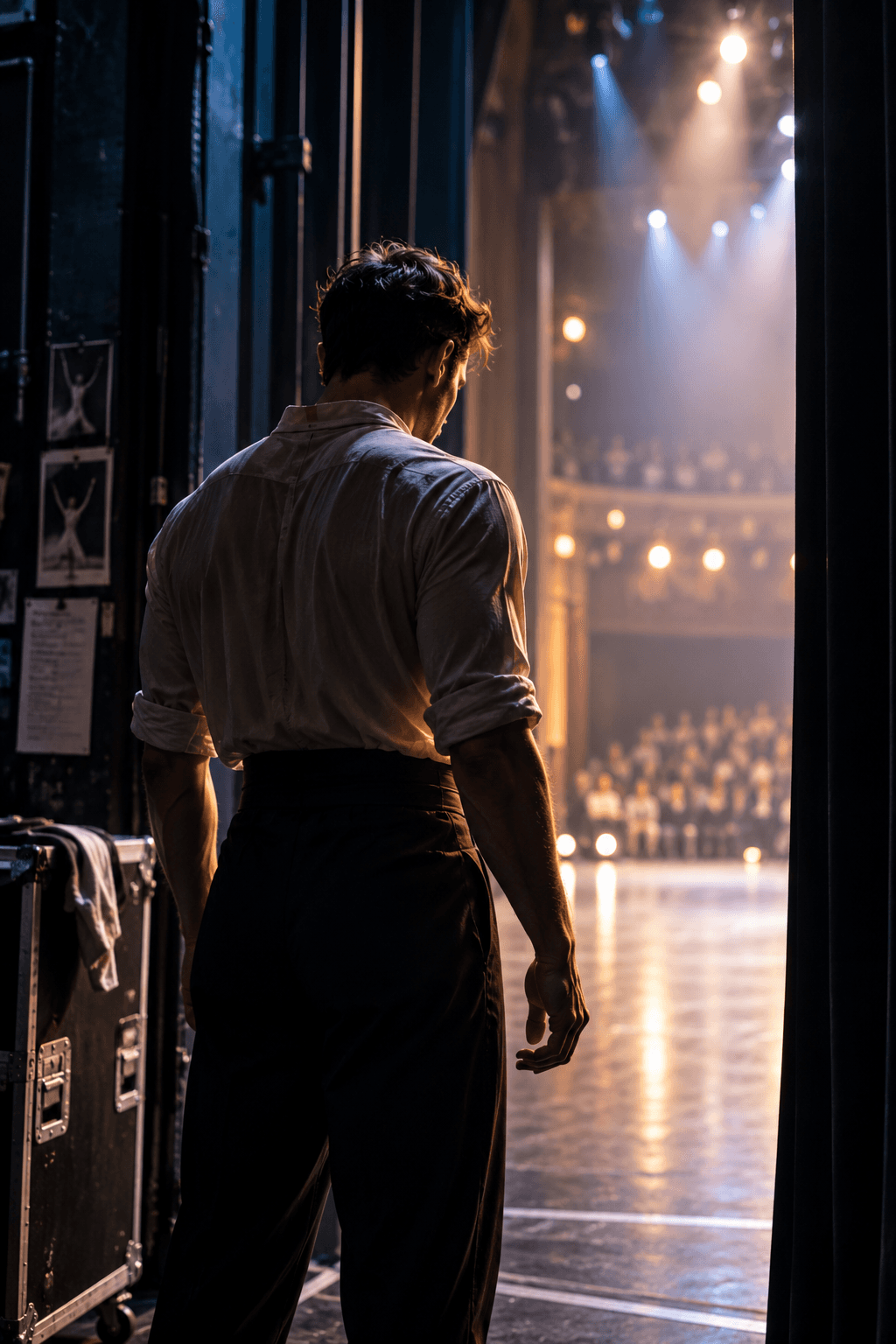
THE BROAD STAGE-PERFORMANCE FRAMEWORK
Performance — On Stage
A practical Framework for entering the performance, staying connected, and keeping things moving when reality differs from rehearsal.
This is not a Framework for removing stage fright. It is a Framework for performing while nerves, uncertainty, and audience reactions are present.
ENTER THE MOMENT
Bring your attention into the room.
STAY CONNECTED
Keep attention on what you are doing — and who you are doing it with.
KEEP THE PERFORMANCE MOVING
Respond, adapt, and continue.
STAGE FRIGHT AND PERFORMANCE ANXIETY
What about stage fright?
Nerves are often treated as the problem to solve before performance can begin.
CuePoint takes a different starting point.
The goal is not to remove nerves before performance. It is to stay connected to the next useful thing while they are present.
People may arrive here through familiar language such as stage fright, performance anxiety, stage nerves, nervous before performing, and nerves before going on stage.
The useful question is:
“How do I perform when nerves take over?”
DIFFERENT PERFORMERS
Different stages. Similar attentional demands.
MUSICIAN
Stay connected to sound, timing, ensemble, and the next phrase.
DANCER
Stay connected to movement, space, rhythm, and other performers.
SPEAKER
Stay connected to the message, the room, and the people listening.
BROAD ENTRY POINT
Performance — On Stage
The broader stage-performance Framework for actors, musicians, dancers, speakers, and other people performing live in front of an audience.
MORE SPECIFIC
Musician — In Performance
A music-specific Framework for staying connected to the music when preparation meets the live moment.
BEFORE, DURING, AFTER
Keep useful attention available around the performance.
BEFORE
STEP INTO THE ROOM
Bring attention from preparation into the actual situation.
DURING
STAY CONNECTED
Notice what is happening and keep responding.
AFTER
LEAVE THE STAGE HERE
Review what is useful without replaying the entire performance indefinitely.
A MUSIC-SPECIFIC CUEPOINT FRAMEWORK
Musician — In Performance
Stay connected to the music when preparation meets the live moment.
The Framework is built around observable musical behaviour — not around trying to command a particular feeling before you play.
Musician — In Performance
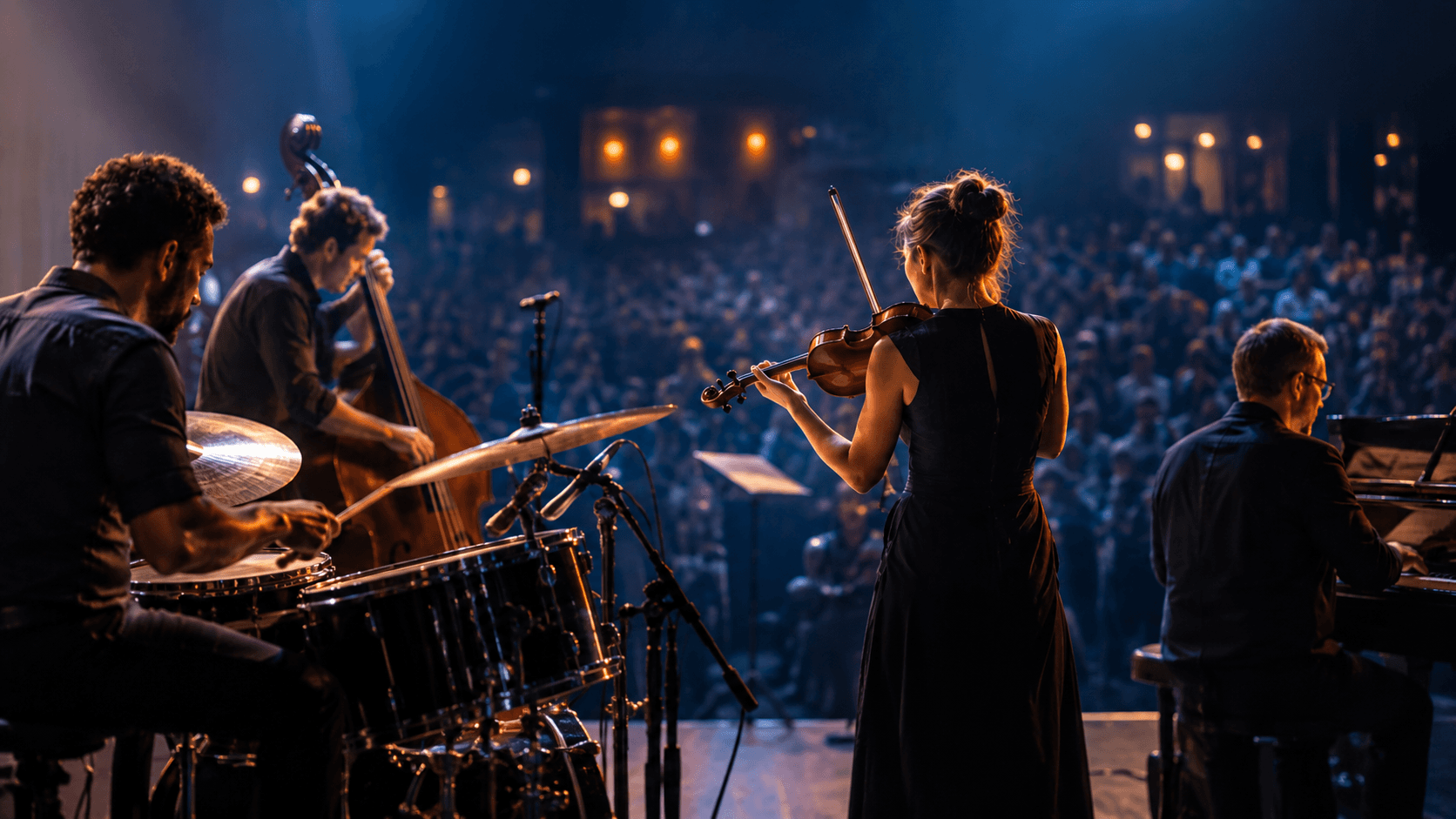
PREPARE
I created useful readiness before the performance began.
LISTEN
I stayed connected to the sound and information around me.
COMMIT
I gave the musical intention a full attempt.
RESPOND
I adjusted to the performance I actually had.
CONTINUE
I kept making music when nerves, mistakes or uncertainty appeared.
A Core Framework available inside CuePoint.
THE IDEAS BEHIND THE FRAMEWORK
For those who want to go deeper into the research, ideas and performance traditions that influenced the Framework.
Explore the thinking behind Musician — In Performance
Music performance anxiety
Live musical performance can produce strong physiological and psychological reactions even in highly skilled performers.
Research on music performance anxiety, including work associated with Dianna Kenny and others, has helped describe how performance situations can change attention, bodily experience and behaviour.
CuePoint does not treat anxiety itself as the performance problem.
A musician may feel activated, uncertain or self-conscious and still perform useful musical actions.
The practical question is what attention and behaviour do when those experiences appear.
That is one reason Musician — In Performance does not contain a CALM or CONFIDENT process.
The Framework instead asks what the musician can still do:
LISTEN
COMMIT
RESPOND
CONTINUE
CUEPOINT QUESTIONWhat can I keep doing musically even if my internal experience changes?
Deliberate practice and preparation
Research on expertise and deliberate practice, including work associated with K. Anders Ericsson, Ralf Krampe and colleagues, has helped show how skilled performance develops through structured, demanding practice over time.
But rehearsal and performance are not identical situations.
Practice can improve technique, timing, interpretation, memory and preparation.
Live performance adds information that rehearsal cannot fully reproduce.
That is why PREPARE is only one of the five processes.
Preparation matters greatly, but it cannot remove the need to listen, adapt and continue when the actual performance begins.
CUEPOINT QUESTIONWhat preparation makes me more able to respond to the live moment rather than more dependent on everything going to plan?
Attention in live performance
Skilled musical performance depends on attention moving between multiple sources of information.
Sound, timing, other musicians, physical sensations, memory, musical intention and audience context can all compete for limited attentional capacity.
Under pressure, attention can become unusually self-focused.
Actions that normally unfold automatically may begin to feel consciously controlled.
LISTEN is CuePoint's way of directing attention back toward task-relevant information.
It does not mean ignoring internal experience.
It means making sure the performance still receives enough attention to guide behaviour.
CUEPOINT QUESTIONWhat information outside my own head does the music need me to notice right now?
Psychological flexibility
Psychological flexibility is a central concept in Acceptance and Commitment Therapy and related research traditions associated with Steven C. Hayes and colleagues.
At its broadest, the idea concerns the ability to remain in contact with present experience while continuing behaviour in the direction of what matters.
CuePoint does not turn ACT into a music-performance technique.
But the distinction is useful.
A performer does not always need to change a thought, feeling or bodily reaction before acting effectively.
CONTINUE reflects that principle.
Nerves can be present. Uncertainty can be present. A mistake can already have happened.
The next useful musical action can still be available.
CUEPOINT QUESTIONWhat can continue even if the feeling does not change?
Mistakes, uncertainty and continuing
Live performance contains events that cannot be taken back.
A note has sounded. A timing decision has been made. Another musician has responded. The audience has heard what happened.
Trying to mentally repair the previous moment can consume attention needed for the next one.
That makes continuing a real performance skill.
CONTINUE does not mean pretending that mistakes do not matter.
After the performance they may contain useful information for practice and reflection.
During the performance, however, the most useful response may be to reconnect quickly with sound, timing and intention.
That is also why the Transition screen says: THAT PART IS OVER. You don't have to replay it. Reconnect with the next sound.
CUEPOINT QUESTIONHow quickly can I return attention to music that has not happened yet?
Further reading & influences
Musician — In Performance is a CuePoint synthesis rather than a reproduction of one published performance model.
The Framework has been influenced by recurring themes in research and professional literature, including work associated with:
- Dianna Kenny and the broader music performance anxiety literature
- K. Anders Ericsson, Ralf Krampe and research on deliberate practice and expertise
- research on attention and skilled performance
- Steven C. Hayes and colleagues on psychological flexibility and Acceptance and Commitment Therapy
- broader research on performance under pressure
These traditions help illuminate different parts of the performance problem.
They should not be understood as validation of CuePoint’s specific five-process Framework.
CuePoint combines these perspectives into:
PREPARE
LISTEN
COMMIT
RESPOND
CONTINUE
The aim is not to guarantee calmness, confidence or flow.
It is to keep a small number of useful musical actions available when preparation meets a live, changing performance.
CUEPOINT FOR PERFORMANCE ARTS
What matters.
When it matters.
Not a promise of calm. A way to keep useful attention close enough to use when the live moment arrives.