

BEFORE A SHOT
CUEPOINT
You often know what you want to do. The difficult part is having it available when the situation gets busy.
The plan is often clear before it starts.
Then the meeting begins. The score changes. Someone reacts. You make a mistake.
And attention goes somewhere else.
DIFFERENT SITUATIONS. SAME CHALLENGE.
BEFORE A SHOT

BEFORE A MEETING

PERFORMANCE ARTS

BUSINESS & DECISIONS

BEFORE SPEAKING
BRING IT BACK
Choose what matters. Keep it available. Notice what you actually did.
CuePoint is designed to stay close to the situation — without turning reflection into another task to manage.
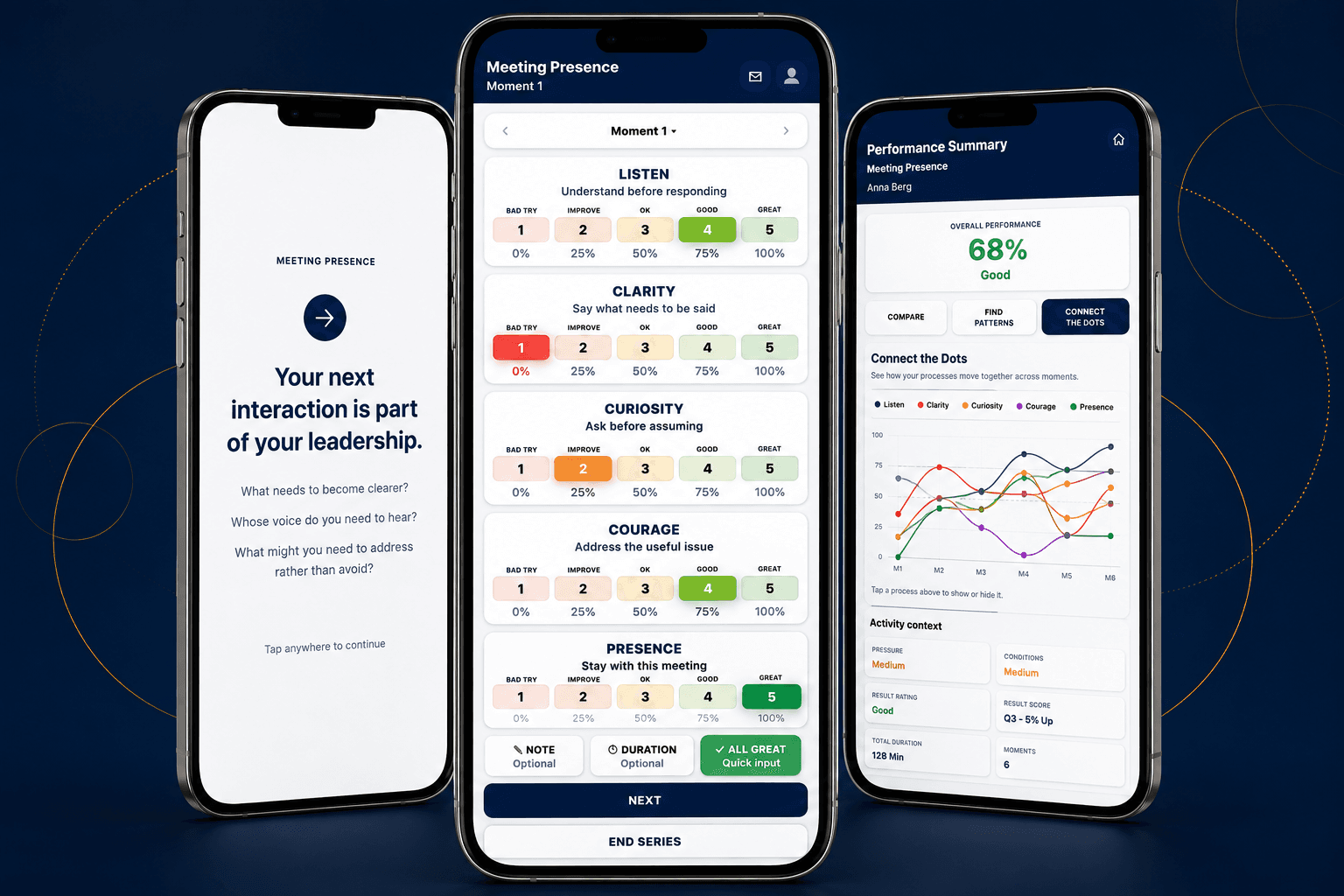
Decide what you want to do well before the situation starts.
Use a simple Cue when attention moves somewhere else.
Capture what actually happened while the experience is still fresh.
See what holds up, what disappears and what may be worth changing.
THE PLAN CAN BE GOOD
YOUR PLAN WAS
Next decision.
But you're still thinking about the last one.
YOUR PLAN WAS
Ask before you explain.
Silence feels uncomfortable.
YOUR PLAN WAS
Commit to the shot.
The score suddenly feels important.
IT DOESN'T MEAN THE PLAN WAS BAD
Attention moves.
A DIFFERENT QUESTION
How did it go?
Results matter.
But they do not always tell you what to repeat, change or do next.
CuePoint keeps attention on actions you can actually notice, adjust and return to.
OVER TIME
What holds up? What disappears? What changes when conditions or pressure change?
FRAMEWORKS
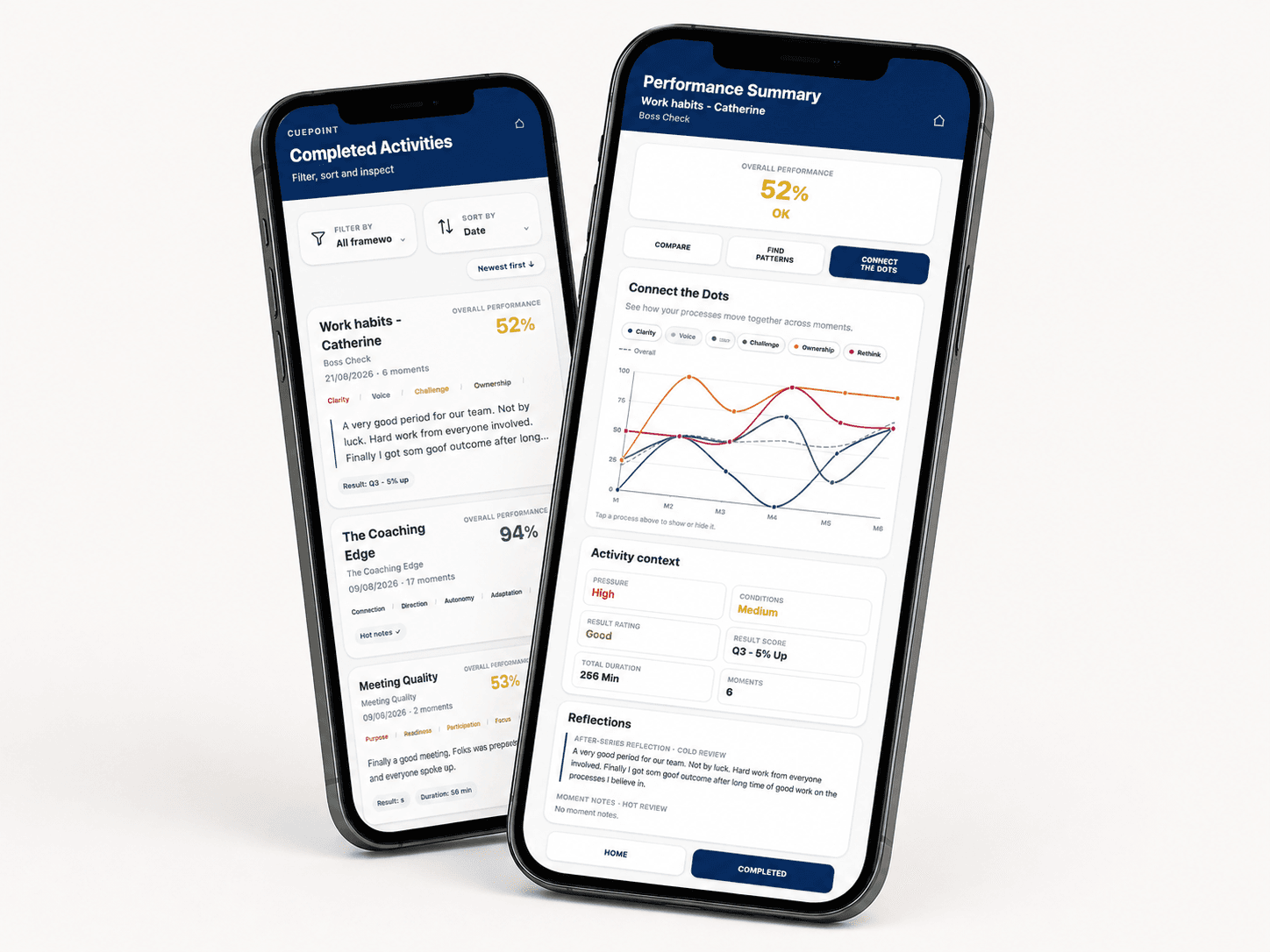
A Framework is a small set of things worth keeping in sight for a particular situation.
Use one that already fits. Adapt the language. Make it yours. Or learn from someone who has already spent years thinking carefully about the situation you are facing.
EXAMPLE FRAMEWORK
Difficult conversation
SAME IDEA. DIFFERENT WORLDS.
CuePoint is not built around one profession or one sport. The situations change. The challenge of keeping useful intentions alive does not.
SPORT
Keep useful actions alive when mistakes, score, pressure and emotion start competing for attention.
PERFORMANCE ARTS
Keep attention close to the parts of performance that can still be influenced when the room, the body and other people change what you prepared.
EDUCATION
Turn good intentions about teaching and learning into something you can actually notice and work on in the room.
WORK & LEADERSHIP
Stay connected to how you want to act when meetings, decisions and difficult conversations become demanding.
BUSINESS & DECISIONS
Keep useful decision behaviour available while customers, markets and evidence are still changing the picture.
HELPING OTHERS
Make professional intentions easier to carry into conversations where attention, emotion and judgment all matter.
RELATIONSHIPS
Stay connected to purpose, the other person, and what is actually happening when conversations, conflict, boundaries, or emotion make the situation harder.
COMMUNITY
Useful thinking already exists everywhere — in classrooms, training grounds, therapy rooms, workplaces, changing rooms and conversations.
CuePoint can help that thinking become something another person can use, adapt, test and improve.
WHY CUEPOINT?
A cue point tells us when something matters.
Read more →
THE THINKING BEHIND IT
Explore the ideas behind attention, intention and controllable actions.
Read more →
WHY FRAMEWORKS?
Frameworks make useful thinking easier to carry into real situations.
Read more →
TOP OF MIND
See how cues, reminders and wallpapers can help thinking stay available.
Read more →
CUEPOINT